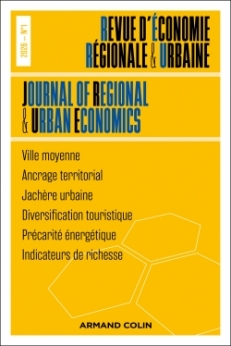
Revue d'économie régionale et urbaine (1/2026)
Parution
février 2026
EAN
9782200936907
Prix au numéro
18 €
Marque
Armand Colin
Pagination
168 pages
Pour acheter ce numéro, contactez-nous
S'abonner
Recevez les numéros de l'année en cours et accédez à l'intégralité des articles en ligne.
Auteur(s)
Manitra Rakotomena
État des lieux de la précarité énergétique à La Réunion : étendue, composition et facteurs explicatifs
Résumé
La précarité énergétique est un phénomène grandissant dans les régions à climat tempéré mais aussi dans les territoires tropicaux. Dans ce papier, nous conduisons un état des lieux de ce phénomène à La Réunion. L’objectif de ce papier est de mesurer l’étendue de la précarité énergétique à La Réunion et de déterminer le profil des ménages précaires. Nous apportons une analyse spatiale fine du phénomène afin d’aider les décideurs politiques à réduire l’étendue de cette précarité. L’adaptation d’indicateurs budgétaires et subjectifs aux spécificités du territoires sont utilisées pour mesurer l’étendue et la composition de la précarité énergétique. Un modèle logit est développé pour étudier les facteurs qui influencent la probabilité d’être précaire.
Mots clés
analyse spatiale
approches budgétaires
approches subjectives
île tropicale
précarité énergétique
Overview of energy poverty in Reunion Island : extent, composition and explanatory factors
Abstract
The complex, multidimensional nature of energy poverty, combined with the need to account for time periods and specific regional characteristics, makes defining it challenging. There is, however, no academic consensus on its precise definition or measurement. Energy poverty is a growing issue in both temperate and tropical climates. Although tropical regions typically do not experience severe cold, households can still face various forms of energy deprivation. This paper presents an overview of energy poverty in Réunion Island. Our objective is to assess the extent of energy poverty in this French overseas department and to identify the characteristics of affected households. Réunion Island’s unique geographical (island), topographical (mountainous with highland communities), climatic (tropical), and socio-economic context means that energy service usage patterns differ significantly from those in mainland France and other overseas departments. We offer a detailed spatial analysis of energy poverty to aid policymakers in mitigating this phenomenon. To analyze the factors affecting the likelihood of energy poverty on the island, we developed a logit model. Our findings indicate that energy poverty is primarily influenced by individual characteristics, housing quality, access to air conditioning, and hot water. Nevertheless, adapting budgetary and subjective indicators alone is insufficient to fully capture the multidimensional nature of energy poverty in tropical island settings like Réunion. Despite these limitations, this article offers the first comprehensive overview of energy poverty in Réunion Island.
Keywords
spatial analysis
budgetary approaches ; subjective approaches ; tropical island ; energy poverty
Citation
Manitra Rakotomena, « État des lieux de la précarité énergétique à La Réunion : étendue, composition et facteurs explicatifs », Revue d'économie régionale et urbaine (1/2026), pp. 103-140, Armand Colin. Disponible sur : http://www.revues.armand-colin.com/eco-sc-politique/revue-deconomie-regionale-urbaine/revue-deconomie-regionale-urbaine-12026/etat-lieux-precarite-energetique-reunion-etendue