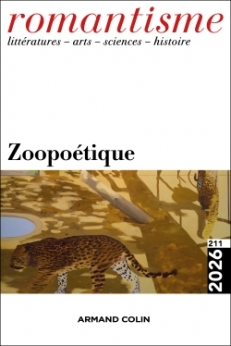
Romantisme N°211 (1/2026)
Parution
mars 2026
EAN
9782200937041
Prix au numéro
20 €
Marque
Armand Colin
Pagination
132 pages
Pour acheter ce numéro, contactez-nous
S'abonner
Recevez les numéros de l'année en cours et accédez à l'intégralité des articles en ligne.
Auteur(s)
Jacques-David Ebguy
Pénélope, François, Loulou... et les autres. Les animaux témoins de la fiction
Résumé
Cet exercice de zoopoétique appliquée, centré sur trois exemples d’animaux, dotés d’un nom, associés à une figure féminine et conduits à la mort – Pénélope, la jument de Mlle Cormon dans La Vieille Fille, François, le chat des Raquin dans Thérèse Raquin, Loulou, le perroquet de Félicité dans « Un coeur simple » –, examine comment le personnage animal participe à la composition sensible et signifiante de l’oeuvre. L’animal, dans ces fictions, peut en effet être caractérisé par son rapport aux intrigues développées, sa plasticité figurative et symbolique, son opacité sémantique, et par la teinte émotionnelle qu’il introduit dans le texte. Dans une perspective zoopoétique, importent à la fois ce qu’il fait dans l’histoire et pour la fiction : témoigner de l’entrée dans une nouvelle temporalité et d’un dérèglement de l’ordre symbolique ancien.
« Pénélope, François, Loulou... and the others. Animals as “witnesses” in fiction »
Abstract
This exercise in applied zoopoetics, focusing on three examples of animals, with names, associated with female characters and led to their deaths – Pénélope, Miss Cormon’s mare in La Vieille fille, François, the Raquins’ cat in Thérèse Raquin, Loulou, Félicité’s parrot in Un coeur simple – examines how the animal character contributes to the construction of meaning and the effects of the texts. In these works of fiction, the animal can be characterised by its relationship to the plots developed, its figurative and symbolic plasticity, its semantic opacity, and the emotional tone it introduces into the text. From a zoopoetic perspective, what matters is both what these animal characters do in the story and what they do for the fiction: they bear witness to the entry into a new temporality and the disruption of the old symbolic order.
Citation
Jacques-David Ebguy, « Pénélope, François, Loulou... et les autres. Les animaux témoins de la fiction », Romantisme N°211 (1/2026), pp. 19-29, Armand Colin. Disponible sur : http://www.revues.armand-colin.com/lettres-langues/romantisme/romantisme-ndeg211-12026/penelope-francois-loulou-autres-animaux-temoins-fiction
DANS LA MÊME thématique
Auteur(s)
Adrien Chassain
Littérature Nº222 (2/2026)
Penser par influence (en littérature)
Parution:
juin 2026
Auteur(s)
Philippe Chéron
LITTÉRATURE Nº 217 (1/2025)
Philippe Denis (1947-2021), au coeur d'une absence
Parution:
mars 2025