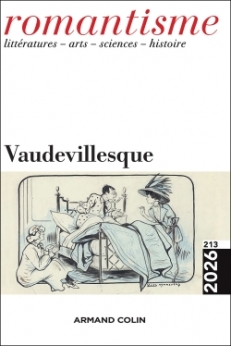
Romantisme N°213 (3/2026)
Vaudevillesque
Parution
septembre 2026
EAN
9782200937065
Prix au numéro
20 €
Marque
Armand Colin
Pagination
138 pages
Pour acheter ce numéro, contactez-nous
S'abonner
Recevez les numéros de l'année en cours et accédez à l'intégralité des articles en ligne.
Auteur(s)
Patrick Désile
« Ce que ça serait rigolo au Palais-Royal... » Vaudeville et premier cinéma comique
Résumé
Critiques et historiens du cinéma ont longtemps voué au vaudeville théâtral une détestation obstinée.Max Linder, ainsi, ne lui devrait rien et fonderait un comique purement cinématographique. On peut cependant considérer ce dénigrement comme un déni. La confrontation de vaudevilles théâtraux (notamment de ceux que donnaient les cafés-concerts, qui forment un sous-genre méconnu) et des premiers films comiques (de Max Linder en particulier) révèle au contraire que les premiers ont constitué un modèle pour les seconds. Titres, noms de héros de séries, personnages types, situations dramatiques, gestuelle et cinématique sont souvent empruntés par les cinématographistes à l’univers du vaudeville. Formons dès lors une hypothèse : le cinéma, qui voudrait ne rien devoir au passé dans l’ordre dramatique, mais ne saurait répudier ce legs, affiche un mépris surjoué pour un genre théâtral qu’il est aisé de vilipender.
« “How funny that would be at the Palais-Royal... ” Vaudeville and early comedy films »
Abstract
Film critics and historians have long harboured a stubborn hatred of vaudeville theatre. Max Linder, they would say, owed nothing to the genre, having created a purely cinematographic form of comedy. Their disparagement, however, can also be seen as a form of denial. A comparison between vaudeville shows (notably those performed at cafés-concerts, which form a little-known sub-genre) and the first comedy films (especially Max Linder’s) reveals that, conversely, the former served as a model for the latter. Filmmakers often borrowed titles, the names of heroes in series, stock characters, dramatic situations, body language and cinematics from the vaudeville universe. We therefore put forward a hypothesis: cinema, wishing to owe nothing to the theatrical past but unable to repudiate this legacy, overplays its contempt for a theatrical genre that is easy to vilify.
Citation
Patrick Désile, « « Ce que ça serait rigolo au Palais-Royal... » Vaudeville et premier cinéma comique », Romantisme N°213 (3/2026), pp. 82-93, Armand Colin. Disponible sur : http://www.revues.armand-colin.com/lettres-langues/romantisme/romantisme-ndeg213-32026/ce-que-ca-serait-rigolo-au-palais-royal-vaudeville-premier-cinema-comique
DANS LA MÊME thématique
Auteur(s)
Véronique Larrivé Bénédicte Duvin-Parmentier
LE FRANÇAIS AUJOURD'HUI Nº228 (1/2025)
Les territoires didactiques des écritures de fiction
Parution:
mars 2025

Auteur(s)
Jean-François Dupeyron
ROMANTISME N°206 (4/2024)
Matières scolaires
Parution:
décembre 2024