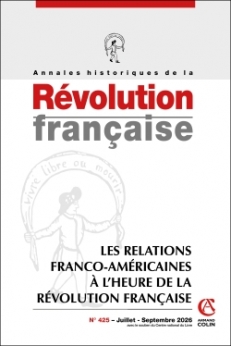
Annales historiques de la Révolution française Nº425 (3/2026)
Parution
septembre 2026
EAN
9782200936600
Prix au numéro
15 €
Marque
Armand Colin
Pagination
280 pages
Pour acheter ce numéro, contactez-nous
S'abonner
Recevez les numéros de l'année en cours et accédez à l'intégralité des articles en ligne.
Auteur(s)
Gabrielle Guillerm
Les prêtres émigrés français comme agents de la politique expansionniste de la jeune république états-unienne, 1789-1815
Résumé
À travers une analyse transnationale, qui s’intéresse au contexte politique et religieux dans la France révolutionnaire et dans la jeune république des États-Unis, cet article examine pourquoi les réfractaires franc¸ais font de bons candidats pour consolider la république dans l’ouest des États-Unis entre 1789 et 1815. On met en évidence le rôle de la coopération entre les élites politiques et militaires étatsuniennes et les réfractaires franc¸ais au service de l’expansion des États-Unis au lendemain des révolutions américaine et franc¸aise. Alors que les territoires situés au nord-ouest de la vallée de l’Ohio constituent la Frontière, une zone de rencontre de peuples sans claire hégémonie politique, l’évêque des États-Unis confie aux réfractaires franc¸ais la tâche de cultiver la loyauté des Créoles à la jeune république américaine. Ces derniers sont des francophones catholiques établis dans l’intérieur du continent depuis le XVIIIe siècle. Les dignitaires politiques et militaires états-uniens approuvent cette politique et sont aussi désireux d’envoyer des réfractaires cultiver l’amitié des autochtones de la Frontière qui forment des confédérations pour s’opposer aux velléités expansionnistes des États-Unis. Les prêtres réfractaires franc¸ais, quant à eux, tendent à être loyaux à la république des États-Unis. Après avoir fui les persécutions religieuses dans la France révolutionnaire, ils apprécient le climat de liberté religieuse des États-Unis.
Mots clés
catholicisme ; réfractaires ; États-Unis ; frontière
French Emigre Priests as Agents of the Expansionist Policy of the Young United States Republic, 1789-1815
Abstract
By a transnational analysis examining the political and religious settings ofRevolutionary France and the young Republic of theUnited States, the author explores how French refractory priests were well-suited to help consolidate the Republic in the western U.S. between 1789 and 1815. The author highlights the cooperative roles played between American political and military elites, and French refractory priests in advancing U.S. expansion in the aftermath of the American and French Revolutions. While the territories north-west of the Ohio Valley constituted the Frontier − a zone of encounter among peoples without clear political hegemony − the Bishop of the United States entrusted the French refractory priests with the task of cultivating the Creoles’ loyalty to the young American republic. The Creoles were French-speaking Catholics who had settled in the interior of the continent since the eighteenth century. U.S. political and military leaders approved this policy, and were also eager to send refractory priests to foster friendships with Native Americans on the Frontier, who were forming confederations to oppose the expansionist ambitions of the United States. The French refractory priests, for their part, were inclined to loyalty to the U.S. Having fled religious persecution in Revolutionary France, they appreciated the climate of religious freedom in the United States.
Citation
Gabrielle Guillerm, « Les prêtres émigrés français comme agents de la politique expansionniste de la jeune république états-unienne, 1789-1815 », Annales historiques de la Révolution française Nº425 (3/2026), pp. 21-45, Armand Colin. Disponible sur : http://www.revues.armand-colin.com/histoire/annales-historiques-revolution-francaise/annales-historiques-revolution-francaise-no425-32026/pretres-emigres-francais-agents-politique