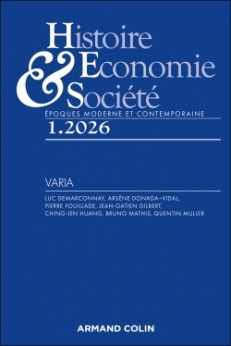
Histoire, Economie et Société (1/2026)
Parution
mars 2026
EAN
9782200936648
Prix au numéro
18 €
Marque
Armand Colin
Pagination
126 pages
Pour acheter ce numéro, contactez-nous
S'abonner
Recevez les numéros de l'année en cours et accédez à l'intégralité des articles en ligne.
Auteur(s)
Pierre Fouillade
Fiscalité et politique : les campagnes du Cantal à la fin du XIXe siècle et la proposition radicale d’impôt sur le revenu
Résumé
On l’a oublié, mais au lendemain des élections législatives de 1898, beaucoup de commentateurs attribuèrent le net progrès des Radicaux dans les campagnes à leur proposition de réformes fiscales par la création de l’impôt sur le revenu. En prenant le cas du Cantal, département pauvre et montagnard où le triomphe des Radicaux fut complet, cet article se propose de retracer l’évolution de la fiscalité directe depuis la fin de l’Ancien Régime et d’évaluer son poids à la fin du siècle pour les petites exploitations qui faisaient vivre l’immense majorité de la population rurale.
Abstract
It has been forgotten today, but in the aftermath of the 1898 legislative elections, many commentators attributed the clear progress of the Radicals in rural areas to their proposal for tax reform through the introduction of an income tax. Taking the case of Cantal – a poor, mountainous department where the Radicals achieved a complete triumph – this article aims to trace the evolution of direct taxation since the end of the former Régime and to assess its impact at the end of the century on small farms that sustained the vast majority of the rural population.
Citation
Pierre Fouillade, « Fiscalité et politique : les campagnes du Cantal à la fin du XIXe siècle et la proposition radicale d’impôt sur le revenu », Histoire, Economie et Société (1/2026), pp. 62-76, Armand Colin. Disponible sur : http://www.revues.armand-colin.com/histoire/histoire-economie-societe/histoire-economie-societe-12026/fiscalite-politique-campagnes-du-cantal-fin-du-xixe-siecle-proposition-radicale
DANS LA MÊME thématique

Auteur(s)
Haim Burstin
ANNALES HISTORIQUES DE LA RÉVOLUTION FRANÇAISE Nº417 (3/2024)
Travail et politique, 1789-1815
Parution:
septembre 2024

Auteur(s)
HISTOIRE, ECONOMIE ET SOCIÉTÉ (1-2/2024)
Les compétitions sportives internationales dans toutes leurs dimensions
Parution:
juin 2024