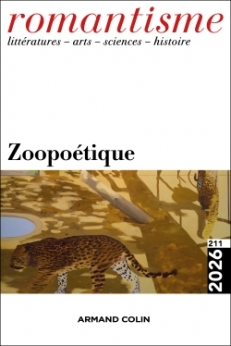
Romantisme N°211 (1/2026)
Parution
mars 2026
EAN
9782200937041
Prix au numéro
20 €
Marque
Armand Colin
Pagination
132 pages
Pour acheter ce numéro, contactez-nous
S'abonner
Recevez les numéros de l'année en cours et accédez à l'intégralité des articles en ligne.
Auteur(s)
Ignacio Ramos-Gay
« De mon vieux compagnon de gloire, il m’a fallu me séparer... ». Affection et identité nationale dans le mélodrame militaire canin
Résumé
Cet article explore le rôle des chiens dans les mélodrames militaires et les scènes patriotiques créés en France à la suite des guerres napoléoniennes et de l’expédition d’Espagne. Dans ces pièces, les chiens étaient minutieusement dressés pour accomplir des prouesses martiales à forte charge symbolique : porter et protéger le drapeau, repousser l’ennemi étranger ou encore se sacrifier dans des tableaux fictionnels poignants où leur mort héroïque célébrait l’amour de la patrie. Est envisagée, en premier lieu, la place privilégiée que les dramaturges confèrent aux chiens dans la construction de l’intrigue. Dans un second temps, est abordée la dimension émotionnelle que leur présence suscite chez les spectateurs, en particulier à travers le lien affectif qu’ils établissent dans les pièces avec les personnages militaires. Enfin, est étudiée la fonction patriotique qui leur est attribuée dans le cadre plus large de la revendication de l’identité nationale française.
« “I have had to part ways with my old companion in glory ...”. Affection and national identity in canine military melodramas »
Abstract
This article explores the role of dogs in military melodramas and scènes patriotiques produced in France in the aftermath of the Napoleonic Wars and the Spanish Campaign. In these plays, dogs were meticulously trained to perform martial feats laden with symbolic meaning: carrying and defending the flag, fending off the foreign enemy, or sacrificing themselves in moving fictional tableaux where their heroic death celebrated love of the homeland. The first part of the study examines the special importance attached to dogs by playwrights in the construction of their plots. The second part investigates the emotional response of spectators when dogs are present on stage, particularly through the affective bond they form with military characters. Finally, the article analyses the patriotic function attributed to these animals within the broader framework of the assertion of French national identity.
Citation
Ignacio Ramos-Gay, « « De mon vieux compagnon de gloire, il m’a fallu me séparer... ». Affection et identité nationale dans le mélodrame militaire canin », Romantisme N°211 (1/2026), pp. 52-65, Armand Colin. Disponible sur : http://www.revues.armand-colin.com/lettres-langues/romantisme/romantisme-ndeg211-12026/mon-vieux-compagnon-gloire-il-ma-fallu-me-separer-affection-identite-nationale-melodrame-militaire
DANS LA MÊME thématique

Auteur(s)
LANGAGES N° 235 (3/2024)
Langues des signes : mise en perspective et contributions de l’<em>Approche Sémiologique</em>
Parution:
septembre 2024
Auteur(s)
Pierre Moinard
LE FRANÇAIS AUJOURD'HUI Nº226 (3/2024)
Les robots dans la classe
Parution:
septembre 2024